Your domain name is your digital address—but which extension should you choose? For startup founders, SaaS builders, and app developers, this decision carries more weight than most realize.
The good news? There's no universally "wrong" choice. The right TLD (Top-Level Domain) depends on your business type, target audience, and long-term goals. Let's break down each option so you can make an informed decision.
Quick Comparison: Which TLD Is Right for You?
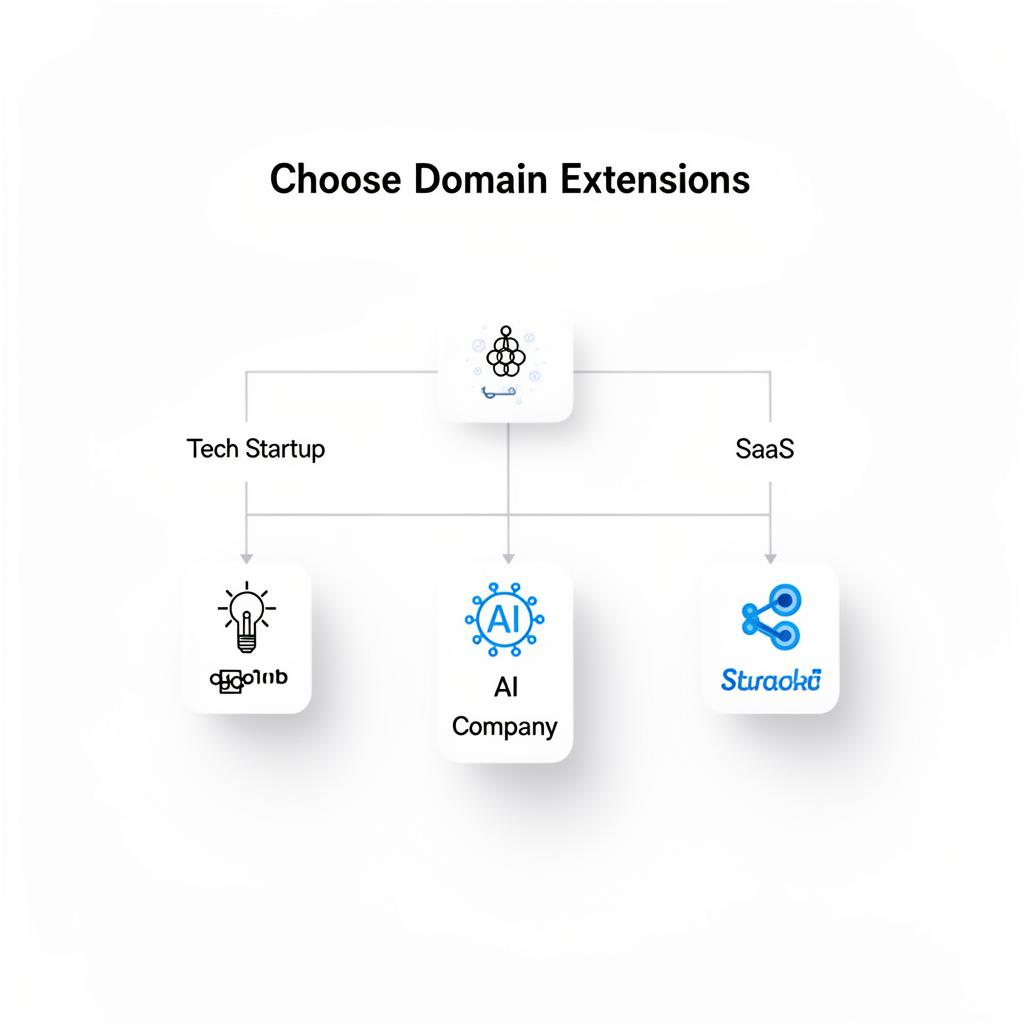
| TLD | Best For | Pros | Cons | Typical Cost |
|---|---|---|---|---|
| .com | Universal, global businesses | Maximum trust, best resale value | Limited availability | $10-15/year |
| .io | Tech startups, developer tools | Tech credibility, good availability | Higher renewal costs | $30-60/year |
| .ai | AI/ML companies | Instant positioning, memorable | Expensive, renewal concerns | $70-100+/year |
| .co | Startups, modern brands | Short, available, affordable | Sometimes confused with .com | $25-35/year |
| .app | Mobile apps, SaaS products | Clear purpose, HTTPS required | Limited outside app space | $15-20/year |
| .net | Tech infrastructure, networks | Established, affordable | Feels dated to some | $10-15/year |
The .com Domain: The Gold Standard
.com remains the most recognized and trusted domain extension worldwide. It's been around since 1985 and accounts for nearly half of all registered domains.
Why Choose .com
Universal trust: Users instinctively trust .com domains. Studies show higher click-through rates and perceived legitimacy compared to newer TLDs.
Email deliverability: .com domains have the best email deliverability rates. Your cold emails and newsletters are less likely to land in spam.
Resale value: If you ever sell your company, a premium .com domain adds significant value to the deal.
No explanation needed: You'll never have to clarify your domain extension when giving it verbally.
The .com Challenge
The downside? Availability is extremely limited. Most single-word .com domains are taken, and many desirable two-word combinations are either registered or available only at premium prices ($1,000+).
When .com Makes Sense
- You're building a consumer-facing brand
- Trust and credibility are paramount (finance, healthcare, enterprise)
- You plan to acquire international customers
- You have budget for a premium domain or a creative name variation
The .io Domain: Tech Startup Favorite
.io has become the unofficial domain of the tech startup world. Originally the country code for British Indian Ocean Territory, it's been repurposed as shorthand for "input/output"—a reference that resonates with developers and tech founders.
Why .io Became Popular
Tech credibility: Using .io signals to other founders, developers, and tech-savvy users that you're part of the startup ecosystem.
Better availability: You can often find short, memorable .io domains that would be impossible (or impossibly expensive) as .com.
Startup pattern matching: Major companies like GitHub (atom.io), Calendly (calendly.io in their early days), and thousands of YC startups have used .io, establishing it as a legitimate choice.
The .io Considerations
Higher costs: .io renewals typically run $30-60/year, compared to $10-15 for .com.
Geopolitical uncertainty: .io is technically controlled by a small territory. While unlikely, future political changes could theoretically affect the TLD.
Less universal recognition: Non-tech audiences may be unfamiliar with .io domains.
When .io Makes Sense
- You're building developer tools or B2B SaaS
- Your target audience is other startups and tech companies
- You want a short domain that's actually available
- You're bootstrapping and a premium .com isn't in budget
The .ai Domain: The AI Gold Rush
With the AI revolution, .ai domains have exploded in popularity. Originally the country code for Anguilla (a Caribbean island), .ai has become synonymous with artificial intelligence companies.
The .ai Appeal
Instant positioning: A .ai domain immediately communicates that your product uses AI technology.
Memorable and modern: It's short, punchy, and feels cutting-edge.
Marketing advantage: The domain itself becomes part of your brand story.
The .ai Reality Check
Expensive: .ai domains are among the priciest TLDs. Registration and renewal often cost $70-100+ per year, with premium names going for thousands.
Two-year minimum registration: Unlike most TLDs, .ai requires a two-year registration commitment.
Potential saturation: As AI hype continues, the .ai extension may become so common that it loses its distinctive appeal.
Non-AI companies beware: Using .ai when you don't actually have AI technology can backfire—it may seem deceptive.
When .ai Makes Sense
- Your product is genuinely AI-powered
- You're targeting AI-savvy customers and investors
- The AI positioning is central to your brand story
- You can justify the higher costs
The .co Domain: The Startup Alternative
.co was originally Colombia's country code but has been successfully marketed as an abbreviation for "company" or "corporation." It's become a solid alternative when .com isn't available.
Why Founders Choose .co
Short and professional: .co looks clean and businesslike.
Good availability: Many quality names are still available at reasonable prices.
Startup precedent: Companies like Twitter (t.co), Google (g.co), and Angel.co have legitimized the extension.
The .co Drawbacks
Typo confusion: Users may accidentally type .com instead of .co, potentially sending traffic to competitors or parked pages.
Defensive registration: You may need to also register the .com (even if just to redirect) to capture misdirected traffic.
When .co Makes Sense
- You want a short, professional domain
- The .com is taken but you can't justify .io or .ai pricing
- You're willing to monitor for typo traffic issues
The .app Domain: Made for Mobile
.app is a newer TLD launched by Google in 2018, specifically designed for mobile applications and web apps.
The .app Advantage
Clear purpose: The extension immediately communicates what you're building.
Built-in HTTPS: .app domains require HTTPS by default, which is good for security and SEO.
Modern perception: It feels contemporary without being gimmicky.
When .app Makes Sense
- You're building a mobile app or progressive web app
- Your primary product is an application, not a service or content site
- You want the security benefits of mandatory HTTPS
The .net Domain: The Reliable Veteran
.net (short for "network") has been around since 1985. While it's lost some luster compared to trendier alternatives, it remains a solid choice for certain businesses.
When .net Works
Infrastructure companies: If you're building networking tools, hosting services, or technical infrastructure, .net makes semantic sense.
Established industries: Some traditional businesses prefer .net's established feel over newer extensions.
Budget constraints: .net domains are typically affordable and widely available.
The .net Perception
For modern tech startups, .net can feel dated. It's often associated with older internet companies or personal websites from the early 2000s. Consider this perception when choosing.
SEO and Domain Extensions: The Truth
Here's what the data actually shows about TLDs and search rankings:
Google's official position: TLD choice has minimal direct impact on SEO. A .io or .ai domain won't hurt your rankings compared to .com.
The real SEO factors: Content quality, backlinks, site speed, and user experience matter far more than your domain extension.
However: Indirect effects exist. .com domains may earn more trust, leading to higher click-through rates from search results. This behavioral signal can indirectly improve rankings.
The bottom line: Don't choose a TLD primarily for SEO. Choose for brand fit, availability, and audience perception.
Making Your Decision: A Framework
Here's how to approach the domain extension decision:
Step 1: Check .com First
Always start by checking if a good .com is available. If you can get yourname.com at a reasonable price, that's usually the best choice.
Step 2: Consider Your Audience
- General consumers: Prefer .com
- Tech-savvy/developers: .io is perfectly acceptable
- AI/ML focus: .ai makes sense
- App-first product: .app works well
Step 3: Factor in Budget
- Bootstrapping: .com, .co, or .net offer the best value
- Funded startup: .io or .ai costs are manageable
- Enterprise budget: Premium .com may be worth the investment
Step 4: Think Long-Term
Consider where your brand will be in 5-10 years. Will .ai still feel relevant if AI becomes ubiquitous? Will .io still signal "tech" when everyone uses it?
How BrandScoop Helps
When you create a brand with BrandScoop, we automatically check domain availability across multiple extensions—.com, .io, .co, .ai, .app, and .net—so you can see all your options at once.
This saves hours of manual searching and helps you make informed decisions about your domain strategy. You'll know immediately whether your dream name is available, what alternatives exist, and whether premium options are worth considering.
The Bottom Line
There's no single "best" domain extension. The right choice depends on:
- Your business type and industry
- Your target audience's expectations
- Your budget and timeline
- Your brand's long-term positioning
For most tech startups, the priority order is typically:
- Good .com (if available and affordable)
- .io (tech credibility, reasonable cost)
- .ai (if genuinely AI-focused)
- .co or .app (solid alternatives)
- .net (reliable fallback)
Whatever you choose, remember: your domain is just the address. What you build at that address matters infinitely more.
Check domain availability for your brand name now
*Related reading: How to Choose the Perfect Business Name — The complete guide to naming strategies that work.*
*Also explore: Why Execution Beats Perfect Branding — Don't let domain decisions slow down your launch.*