

Here's a hard truth that nobody in the branding industry wants you to hear: unless you're building a luxury brand that commands premium prices through perceived exclusivity, your logo and colors matter far less than you think.
In the startup, SaaS, and app founder space, there's a dangerous trap that claims thousands of would-be entrepreneurs every year. It's not lack of funding. It's not a bad market. It's the perfectionism trap—the endless cycle of tweaking logos, debating color palettes, and waiting for the "perfect" brand before launching.
The 90% Startup Failure Rate Isn't About Branding

According to Exploding Topics, approximately 90% of startups fail. But when researchers analyze why, branding almost never makes the list. The top reasons include:
- No market need (42%) — Built something nobody wanted
- Ran out of cash (29%) — Couldn't sustain operations
- Wrong team (23%) — Execution problems
- Got outcompeted (19%) — Slower to market
- Pricing/cost issues (18%) — Business model failures
Notice what's absent? "Logo wasn't good enough." "Colors were wrong." "Brand name wasn't perfect."
The truth is brutal but liberating: your customers care about whether your product solves their problem, not whether your hex codes are perfectly harmonized.
Reid Hoffman's Embarrassing Launch Philosophy
LinkedIn co-founder Reid Hoffman built one of the most valuable business networks in history. His philosophy on launching?
If you're not embarrassed by the first version of your product, you've launched too late.
This isn't false modesty. Hoffman explains that when starting a company, "You jump off a cliff and assemble an airplane on the way down." The only way to know if your plane can fly is to actually jump.
Hoffman launched LinkedIn with a bare-bones interface that would make most designers cringe. But it worked. Users didn't care about polish—they cared about connecting with professionals. The billion-dollar brand identity came later, after product-market fit was proven.
The MVP Mindset: Ship, Learn, Iterate
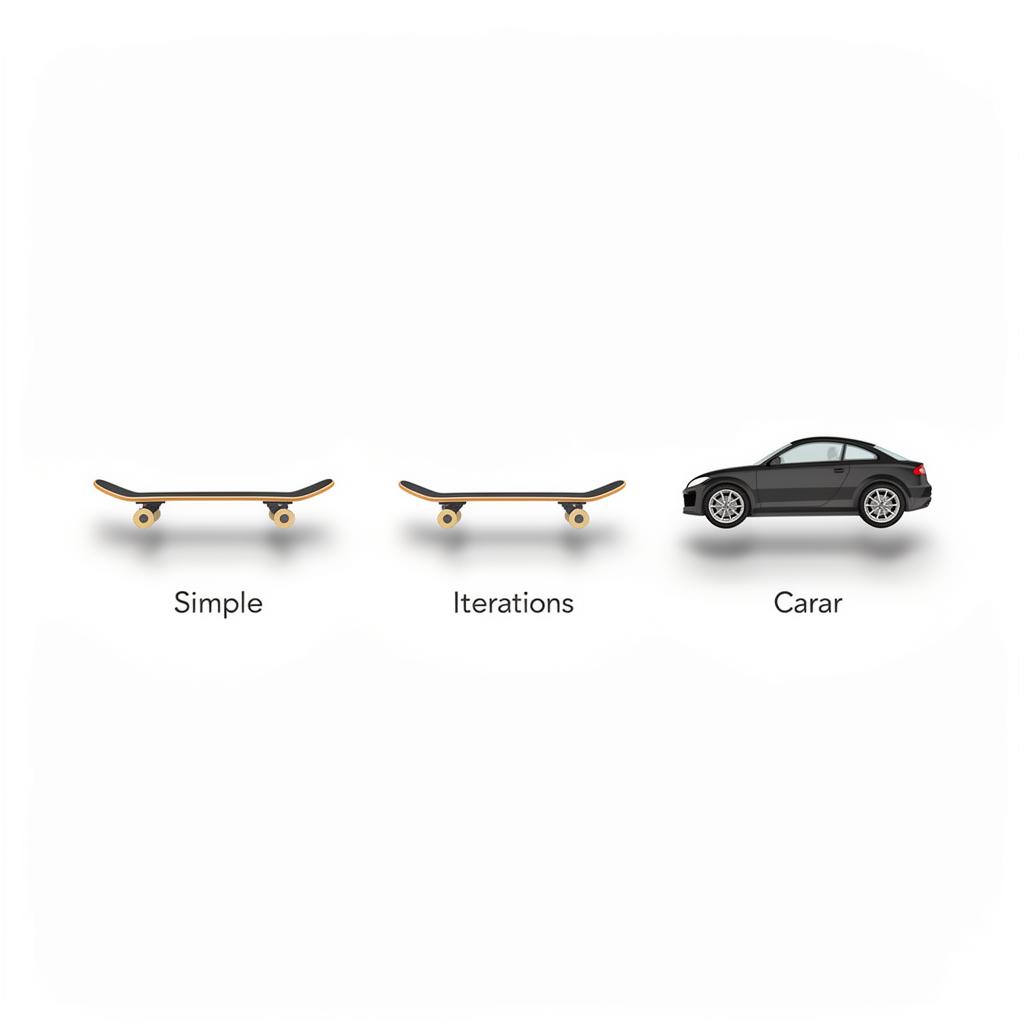
The lean startup methodology has proven that shipping fast beats launching perfect. Here's why:
1. Real Feedback Beats Assumptions
You think you know what customers want. You're probably wrong. The only way to discover what actually works is to put something in front of real users and watch what happens.
Every week you spend perfecting your brand is a week without user feedback. That's a week of building on assumptions instead of data.
2. Speed Creates Competitive Advantage
In the startup world, speed is everything. The first mover who ships a functional product beats the perfectionist who's still debating serif vs. sans-serif fonts.
While you're choosing between 47 shades of blue, your competitor is acquiring your future customers.
3. Iteration Compounds
The startup that ships in month one and iterates for six months will always beat the startup that spends six months preparing for a "perfect" launch. Compound improvements from real user data create products that actually solve problems.
The Successful Founders Who "Got It Wrong"
Let's look at some of the most successful tech companies and their early branding:
Google: Started as "BackRub" with an amateurish logo. The founders were PhD students, not designers. They shipped a search engine that worked, and the brand evolved later.
Amazon: Jeff Bezos famously used a door as his desk and launched with a basic website. The smile logo? That came years later. First, he proved people would buy books online.
Airbnb: The original site was called "AirBed & Breakfast" and looked like a college project. But it solved a real problem—affordable accommodation. The elegant brand came after billions in bookings.
Slack: Started as an internal tool at a gaming company that was failing. The UI was rough. But teams loved how it solved communication problems. Beautiful design followed traction.
Twitter: The bird logo everyone recognizes? It was redesigned multiple times. The original was far simpler. But the core product—140-character status updates—captured users before the brand was refined.
The Exception: When Branding Actually Matters First
There is one category where brand-first thinking makes sense: premium luxury products where the brand itself is the value proposition.
Think Rolex, Louis Vuitton, or Tesla. These companies sell status, exclusivity, and identity. The brand *is* the product. Customers pay a premium specifically because of what the brand represents.
But if you're building:
- A SaaS tool that saves businesses time
- A mobile app that solves a daily problem
- A marketplace connecting buyers and sellers
- A productivity platform for teams
- An AI-powered solution for any industry
...then your brand is the *vehicle*, not the destination. Users will adopt your product because it works, not because your typography is exquisite.
The Perfectionism Trap: Analysis Paralysis
We've seen it countless times. A founder with a brilliant idea spends:
- 3 weeks choosing a business name
- 2 weeks on logo revisions
- 1 week debating color palettes
- 2 weeks on website design tweaks
- Countless hours on social media aesthetics
Six weeks later, they still haven't shipped anything that users can actually try. Meanwhile, their energy and motivation have drained. Their runway has shortened. Their window of opportunity has narrowed.
This is the perfectionism trap, and it kills more startups than bad products ever could.
As the saying goes: "Done is better than perfect."
Or as we prefer: "Shipped is better than theoretically flawless."
How BrandScoop Solves This Problem
This is exactly why BrandScoop exists. We built it for founders who understand that:
- Time spent on branding is time not spent on product
- Professional branding doesn't require months of deliberation
- The goal is to ship, not to win design awards
With BrandScoop, you can:
- Generate AI-powered brand names with instant domain availability checking
- Get professional logo variations in minutes
- Receive cohesive color palettes that work
- Download complete brand guidelines immediately
The entire process takes minutes, not months. You get professional-grade branding that establishes credibility—then you get back to building what actually matters.
The Mindset Shift: Branding as Utility
Here's how successful SaaS founders and app builders think about branding:
Old mindset: "My brand needs to be perfect before I can launch."
New mindset: "My brand needs to be professional enough to not distract from my product's value."
That's it. Professional enough. Not award-winning. Not revolutionary. Not the most beautiful brand in your industry.
Just professional enough that users focus on what your product does, not what your logo looks like.
Action Steps for Founders Who Want to Ship
If you're stuck in the perfectionism loop, here's your escape plan:
Step 1: Set a Deadline
Give yourself 48 hours maximum for brand decisions. After that, ship with what you have.
Step 2: Use Tools That Speed You Up
Generate your brand with BrandScoop in a single session. Don't schedule three meetings with designers. Don't create elaborate mood boards. Get it done.
Step 3: Focus on What Users Care About
Ask yourself: "Will this branding decision affect whether my product solves the user's problem?"
If the answer is no, stop deliberating and start building.
Step 4: Plan to Evolve
Your brand can—and should—evolve as your product matures. Twitter's logo changed. Google's logo changed. Your logo can change too.
Give yourself permission to launch with "good enough" and iterate later.
The Bottom Line
Unless you're building a luxury brand where premium positioning is the entire strategy, execution matters exponentially more than perfect branding.
The startups that succeed are the ones that:
- Ship early and often
- Learn from real user feedback
- Iterate based on data, not assumptions
- Focus their creative energy on product excellence
The startups that fail are often the ones still tweaking their logo while competitors acquire their market.
Stop perfecting. Start shipping. Build your brand in minutes and get back to what matters.
*Related reading: Who Is BrandScoop For? A Founder's Guide to Creative Bandwidth — Learn more about whether you're a "Product Visionary" or "Brand Builder" and how to allocate your creative energy.*
*Also explore: How to Choose the Perfect Business Name — When you're ready to decide, here's what actually matters in a name.*