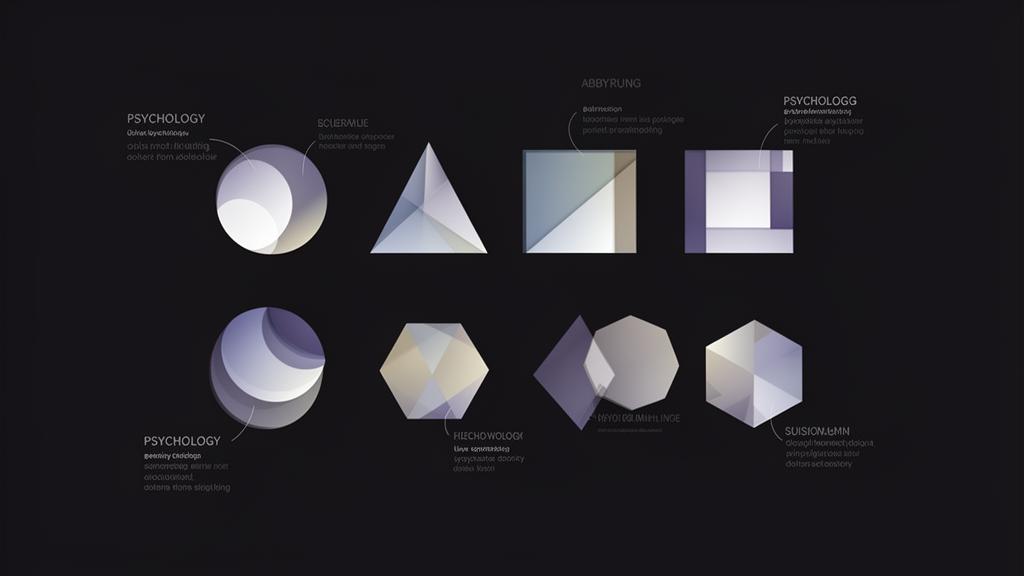
Before a customer reads your company name or processes your colors, their brain has already responded to the shapes in your logo. Shape psychology is one of the most powerful—and most overlooked—tools in brand identity design.
Research from the Journal of Consumer Research shows that shapes trigger automatic emotional and cognitive responses that influence brand perception, purchase decisions, and brand loyalty.
Understanding this psychology helps you choose (or evaluate) a logo that subconsciously communicates exactly what your brand stands for.
Circles and Ovals: Community, Harmony, Unity
Psychological associations:
- Inclusivity and belonging
- Wholeness and completeness
- Warmth and comfort
- Endless cycle, continuity
- Protection and safety
Brands that use circles: Olympic rings, Starbucks, BMW, MasterCard, Pepsi, Spotify
Best for industries:
- Community platforms and social networks
- Wellness and healthcare brands
- Non-profits and organizations
- Global brands (circles are universally positive)
Why circles work: Circles have no sharp edges, which our brains interpret as non-threatening. They suggest unity, infinity, and protection. Research from Stanford University shows that rounded shapes are perceived as more friendly and approachable.
Squares and Rectangles: Stability, Trust, Order
Psychological associations:
- Reliability and dependability
- Professionalism and efficiency
- Strength and durability
- Balance and equality
- Structure and organization
Brands that use squares: Microsoft, BBC, American Express, National Geographic, LinkedIn
Best for industries:
- Financial services and banking
- Technology and enterprise software
- Construction and engineering
- Legal and professional services
Why rectangles work: Right angles suggest precision and mathematical certainty. Our brains associate geometric regularity with reliability—which is why banks and law firms gravitate toward angular logos.
Triangles: Power, Innovation, Direction
Psychological associations:
- Energy and dynamism
- Innovation and forward-thinking
- Hierarchy and aspiration
- Precision and science
- Movement and progress
Brands that use triangles: Adidas, Delta Airlines, Google Play, Caterpillar, HSBC
Best for industries:
- Technology and innovation
- Sports and athletic brands
- Science and engineering
- Growth-focused startups
Directional power: Triangles pointing up suggest stability and ambition. Triangles pointing right suggest forward movement. Inverted triangles can feel unstable—use cautiously.
Organic and Curved Shapes: Creativity, Nature, Flexibility
Psychological associations:
- Natural and organic
- Creative and artistic
- Approachable and friendly
- Fluid and adaptable
- Comfort and ease
Brands that use organic shapes: Pepsi (wave), Nike (swoosh), Twitter (bird), Airbnb (Bélo)
Best for industries:
- Food and beverage
- Creative and entertainment
- Environmental and sustainable brands
- Children's products
Lines: Direction, Speed, Connection
Horizontal lines suggest:
- Calm and tranquility
- Breadth and community
- Stability and grounding
Vertical lines suggest:
- Strength and power
- Ambition and growth
- Aggression and masculinity
Diagonal lines suggest:
- Movement and speed
- Dynamism and energy
- Innovation and disruption
Combining Shapes: Strategic Messaging
Most effective logos combine shapes to create nuanced messaging:
- Circle + triangle = Innovation within community (Google Chrome)
- Square + circle = Stability with warmth (Instagram's rounded square)
- Triangle + lines = Direction with speed (Adidas stripes)
The key is intentionality. Choose shapes that align with the specific message your brand needs to communicate.
Applying Shape Psychology to Your Logo
Step 1: Define Your Core Message
What single feeling should your logo communicate? Match it to a primary shape family:
| If you want to feel... | Use primarily... |
|---|---|
| Trustworthy, stable | Squares, rectangles |
| Friendly, inclusive | Circles, ovals |
| Innovative, dynamic | Triangles, diagonals |
| Natural, organic | Curves, flowing shapes |
| Powerful, bold | Angular, thick strokes |
| Elegant, refined | Thin lines, minimal geometry |
Step 2: Consider Your Industry
Look at what shapes dominate your industry—then make a strategic choice:
- Conform if trust and familiarity matter (finance, healthcare)
- Contrast if differentiation matters (tech, creative, consumer)
Step 3: Evaluate Your AI-Generated Options
When using an AI logo maker like BrandScoop, evaluate generated options through the shape psychology lens. Which options use shapes that align with your brand's core message?
The Takeaway
Shape psychology isn't about rigid rules—it's about intentional design choices. When you understand what shapes communicate subconsciously, you can make more strategic decisions about your logo, whether you're creating it with AI, evaluating designer proposals, or refining an existing mark.
Your logo's shapes are speaking to customers before they read a single word. Make sure they're saying the right things.